Showing posts with label Ramana. Show all posts

Sunday, November 22, 2015

this delusional state


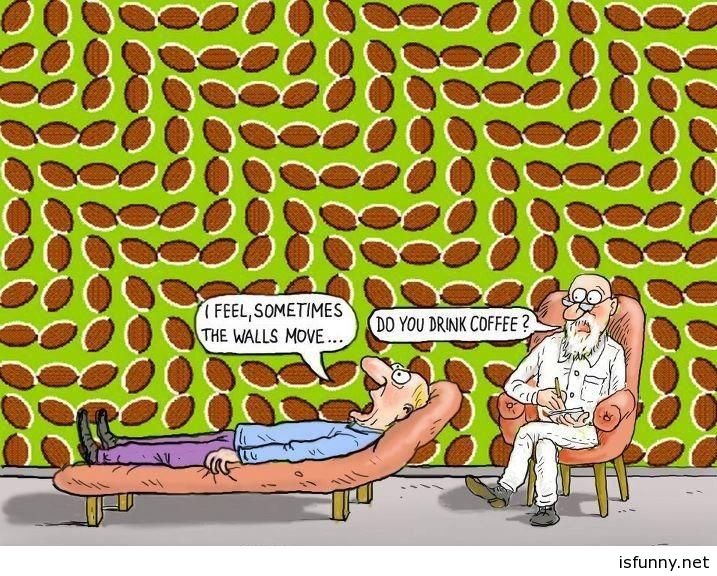
Once in our yoga seminar one of the students asked Rajo, my first teacher, about something that had happened to her the evening before in her room. She said that she was just looking at the wall when suddenly it started to move and she asked what was the reason for that, and if it was something to be alarmed about. He replied that she had in that moment had a glimpse of reality because actually nothing is as fixed as it appears in our perception. After the couple of days in the yoga seminar breathing deeply and doing the exercises that bring us into a more tranquil state she was able to relax the programming of the psycho-somatic system and was able to see through the projected version of reality to the actuality. 

Saturday, November 14, 2015

unthought thought

donald zolan the thinker paintings
Artist: Donald Zolan - The Thinker
I have a meditation coloring book of my own creation. In it I usually draw some few words that are significant for my morning meditation on each day. About six weeks ago I had the three words "no thought thought" which were a connection for me to a sense of the mind in abeyance. It was the feeling of being poised on the verge of a thought but with a fine restraint so that the mind energy did not form into an actual thought.

Friday, October 23, 2015

going about with a swollen head

https://uniquevistas.com/wp-content/uploads/2014/10/ramana-stare.jpg
Giridhari Lal was a resident of Sri Aurobindo Ashram, Pondicherry in the 1940s.
In response to Giridhari Lal’s question to Ramana Maharshi, “When the kali yuga, which consists of so many thousand years, would end?” Bhagavan said: "I don’t consider time real. So I take no interest in such matters. We know nothing about the past or the yugas which were in the past. Nor do we know about the future. But we know the present exists. Let us know about it first. Then doubts will cease. Time and space always change, but there is something which is eternal and changeless. For example, the world and time, past or future, nothing exists for us in sleep. But we exist. Let us try to find out that which is changeless and which always exists. How will it benefit us to know that the kali yuga started in such and such year and that it would end so many years from now?"
Regarding the devotee’s query as to why the puranas (ancient Hindu myths and legends) give the exact duration of each yuga, Bhagavan replied: "The immensity of the periods of time assigned to each yuga may be a mere device to draw man’s attention to the fact that even if he lived up to hundred years, his life is such a trifling, insignificant fraction of a yuga. Therefore, he should take a proper view of his humble place in the entire scheme and not go about with a swollen head, deeming himself as of great importance. Instead of saying, What is man’s life compared to eternity? They have taught him to consider how short his span is."
source (PDF file: FACE TO FACE WITH SRI RAMANA MAHARSHI)
::
::
::

Tuesday, October 6, 2015

how are we to treat others?

::

::

::

Questioner: How are we to treat others?

Ramana: There are no others.

::


::
::
::

Sunday, October 4, 2015

instantaneous creation - Ramana

http://riverbankoftruth.com/wp-content/uploads/2013/07/1016286_411045405671617_1554698846_n.jpg
source


My comment: In this exchange with a visitor Ramana explains why he doesn’t insist on only the absolute view of Reality that he sees, but rather varies his response according to the willingness of the listener to accept what he says. This I find especially educational for me as one who has had the strong tendency to always hold to ‘my’ point of view and hold diverging ones to be at least limited, if not incorrect. I recognize that focusing only on the ‘correctness’ of a view is very limiting as it leaves out the most important element of any exchange: the heart connection.
Questioner: “In the vedanta of Sri Sankaracharya the principle of the creation of the world has been accepted for the sake of beginners, but for the advanced the principle of non-creation is put forward. What is your view on this matter?”
Ramana’s answer: “‘There is no dissolution or creation, no one in bondage, nor anyone pursuing spiritual practices. There is no one desiring liberation nor anyone liberated. This is the absolute truth.’ This sloka appears in the second chapter of Gaudapada’s karika. One who is established in the Self sees this by his knowledge of reality.”
Q: “Is not the Self the cause of this world we see around us?"
A: “Self itself appears as the world of diverse names and forms. However, Self does not act as the efficient cause [nimitta karana], creating, sustaining and destroying it. Do not ask ‘Why does the confusion of Self, not knowing the truth that it itself appears as the world, arise?’ If instead you enquire ‘To whom does this confusion occur?’, it will be discovered that no such confusion ever existed for Self.”
Q: “You seem to be an exponent of ajata doctrine of advaita vedanta.”
A: “I do not teach only the ajata doctrine. I approve of all schools. The same truth has to be expressed in different ways to suit the capacity of the hearer. The ajata doctrine says, ‘Nothing exists except the one reality. There is no birth or death, no projection or drawing in, no seeker, no bondage, no liberation. The one unity alone exists.’ To such as find it difficult to grasp this truth and who ask, ‘How can we ignore this solid world we see all around us?’, the dream experience is pointed out and they are told, ‘All that you see depends on the seer. Apart from the seer, there is no seen.’ This is called the drishti-srishti vada or the argument that one first creates out of one’s mind and then sees what one’s mind itself has created. Some people cannot grasp even this and they continue to argue in the following terms:
‘The dream experience is so short, while the world always exists. The dream experience was limited to me. But the world is felt and seen not only by me, but by so many others. We cannot call such a world non-existent.’ When people argue in this way they can be given a srishti-drishti theory, for example, ‘God first created such and such a thing, out of such and such an element, and then something else was created, and so on.’ That alone will satisfy this class. Their minds are otherwise not satisfied and they ask themselves, ‘How can all geography, all maps, all sciences, stars, planets and the rules governing or relating to them and all knowledge be totally untrue?’ To such it is best to say, ‘Yes, God created all this and so you see it.’”
Q: “But all these cannot be true. Only one doctrine can be true.”
A: “All these theories are only to suit the capacity of the learner. The absolute can only be one. The vedanta says that the cosmos springs into view simultaneously with the seer and that there is no detailed process of creation. This is said to be yugapat-srishti [instantaneous creation]. It is quite similar to the creations in dream where the experiencer springs up simultaneously with the objects of experience. When this is told, some people are not satisfied for they are deeply rooted in objective knowledge. They seek to find out how there can be sudden creation. They argue that an effect must be preceded by a cause. In short, they desire an explanation for the existence of the world which they see around them. Then the srutis [scriptures] try to satisfy their curiosity by theories of creation. This method of dealing with the subject of creation is called krama-srishti [gradual creation]. But the true seeker can be content with yugapat-srishti, instantaneous creation.”
Q: “What is the purpose of creation?”
A: “It is to give rise to this question. Investigate the answer to this question, and finally abide in the supreme or rather the primal source of all, the Self. The investigation will resolve itself into a quest for the Self and it will cease only after the non-Self is sifted away and the Self realized in its purity and glory.
“There may be any number of theories of creation. All of them extend outwardly. There will be no limit to them because time and space are unlimited. They are however only in the mind. If you see the mind, time and space are transcended and the Self is realized.
“Creation is explained scientifically or logically to one’s own satisfaction. But is there any finality about it? Such explanations are called krama-srishti [gradual creation]. On the other hand, drishti-srishti [simultaneous creation] is yugapat-srishti. Without the seer there are no objects seen.
“Find the seer and the creation is comprised in him. Why look outward and go on explaining the phenomena which are endless?”
source: David Godman, Be As You Are, The Teachings of Sri Ramana Maharshi, p. 177, 178
::
::
::

Thursday, October 1, 2015

special states

http://digitalblasphemy.com/graphics/previews/cosmogony_preview.jpghttp://digitalblasphemy.com/graphics/previews/cosmogony_preview.jpg

Am I in a "special state" after a particularly remarkable shift in perspective?

The question as to as "special state" is an interesting one - this shift that I am in shows me more clearly what all the sages mean, especially Ramana and the Zen masters when they say that there is no enlightenment and no liberation when one realizes that everything already is the Big Mind, or the Self, and only our little mind taking a limited perspective creates a world of separation from Self, Buddha Mind, or God, which are all the same thing.

To say "only the little mind" is, of course, an understatement, since it sounds like the "little mind" should not be a big hindrance to just remaining as "what is", which is the one vast and mysterious Universal Being showing up as many.

As you can see from my yesterday's post "The ego mind is a slug", I am starting to look at the mind, to see if I can discover what it actually is, or if it even really exists. It is quite mysterious. One could say that all the world is an appearance in the Self, so of course this includes the mind. The statement that "All, including the mind, is an appearance in the Self" is first of all a concept. Do I get glimpses of this as a direct experience? Yes. Is there a certain focus that I can take to allow this to become a continuous realization? Yes, there does seem to be, but it is rather difficult. In my experience it means taking the stance "nothing plus nothing equals nothing" (all is but an appearance in Self with no lasting substance in and of itself) and at the same time being fully and passionately engaged in life, not falling into nihilism etc. Ramana addresses this here: "The investigation will resolve itself into a quest for the Self and it will cease only after the non-Self is sifted away and the Self realized in its purity and glory." source p. 178 I could therefore say that the formula "nothing plus nothing equals nothing" reminds me to "sift away the non-Self" and to remember that everything I see and interact with is actually appearing in the Self, which means it is all "identical with the beingness of the Self."

David Godman summarizes Ramana's views on this subject here:
"Sri Ramana adopted three different standpoints when he spoke about the nature of the physical world. …
1 Ajata vada (the theory of non-causality). This is an ancient Hindu doctrine which states that the creation of the world never happened at all. It is a complete denial of all causality in the physical world. Sri Ramana endorsed this view by saying that it is the jnani’s experience that nothing ever comes into existence or ceases to be because the Self alone exists as the sole unchanging reality. It is a corollary of this theory that time, space, cause and effect, essential components of all creation theories, exist only in the minds of ajnanis and that the experience of the Self reveals their non-existence.
This theory is not a denial of the reality of the world, only of the creative process which brought it into existence. Speaking from his own experience Sri Ramana said that the jnani is aware that the world is real, not as an assemblage of interacting matter and energy, but as an uncaused appearance in the Self. He enlarged on this by saying that because the real nature or substratum of this appearance is identical with the beingness of the Self, it necessarily partakes of its reality. That is to say, the world is not real to the jnani simply because it appears, but only because the real nature of the appearance is inseparable from the Self.
The ajnani, on the other hand, is totally unaware of the unitary nature and source of the world and, as a consequence, his mind constructs an illusory world of separate interacting objects by persistently misinterpreting the sense impressions it receives. Sri Ramana pointed out that this view of the world has no more reality than a dream since it superimposes a creation of the mind on the reality of the Self. He summarized the difference between the jnani’s and the ajnani’s standpoint by saying that the world is unreal if it is perceived by the mind as a collection of discrete objects and real when it is directly experienced as an appearance in the Self." source p. 175
The inquiry is on-going.

http://m.cdn.blog.hu/ko/koreainhungary/image/jackie-kim-korean-folk-art-min-hwa-15.jpghttp://m.cdn.blog.hu/ko/koreainhungary/image/jackie-kim-korean-folk-art-min-hwa-15.jpg
::
::
::

Friday, September 25, 2015

Ecstasy, Happiness and Realization - Ramana

ramana_maharshi_monkey_devotee


Q: So one should not try to perpetuate blissful or ecstatic states?
Ramana: The final obstacle in meditation is ecstasy; you feel great bliss and happiness and want to stay in that ecstasy. Do not yield to it but pass on to the next stage which is great calm. The calm is higher than ecstasy and it merges into samadhi. Successful samadhi causes a waking sleep state to supervene. In that state you know that you are always consciousness, for consciousness is your nature. Actually, one is always in samadhi but one does not know it. To know it all one has to do is to remove the obstacles.

Q: Through poetry, music, japa, [chanting holy names], bhajans [devotional songs], the sight of beautiful landscapes, reading the lines of spiritual verses, etc., one experiences sometimes a true sense of the all- pervading unity. Is that feeling of deep blissful quiet in which the personal self has no place the same as the entering into the Heart of which Bhagavan speaks? Will undertaking these activities lead to a deeper samadhi and so ultimately to a full vision of the real?
A: There is happiness when agreeable things are presented to the mind. It is the happiness inherent in the Self, and there is no other happiness. And it is not alien and afar. You are diving into the Self on those occasions which you consider pleasurable and that diving results in self-existent bliss. But the association of ideas is responsible for foisting that bliss on other things or occurrences while, in fact, that bliss is within you. On these occasions you are plunging into the Self, though unconsciously. If you do so consciously, with the conviction that comes of the experience that you are identical with the happiness which is truly the Self, the one reality, you call it realization. I want you to dive consciously into the Self, that is the Heart.

Q: I have been making sadhana [spiritual practice] for nearly twenty years and I can see no progress. What should I do? From about five o’clock every morning I concentrate on the thought that the Self alone is real and all else unreal. Although I have been doing this for about twenty years I cannot concentrate for more than two or three minutes without my thoughts wandering.
A: There is no other way to succeed than to draw the mind back every time it turns outwards and fix it in the Self. There is no need for meditation or mantra or japa or anything of the sort, because these are our real nature. All that is needed is to give up thinking of objects other than the Self. Meditation is not so much thinking of the Self as giving up thinking of the not-Self. When you give up thinking of outward objects and prevent your mind from going outwards by turning it inwards and fixing it in the Self, the Self alone remains.
David Godman, “Be As You Are, The Teachings of Sri Ramana Maharshi”, p. 167-8

::
::
::

Tuesday, September 22, 2015

live as beauty - Ramana


http://b50ym1n8ryw31pmkr4671ui1c64.wpengine.netdna-cdn.com/wp-content/blogs.dir/11/files/2014/05/Organs_Mountains-photo-credit-Patrick-J-Alexander.jpg

Questions put to Ramana Maharshi:

Question: What is reality?
Ramana's Answer: The radiance of consciousness-bliss, in the form of one awareness shining equally within and without, is the supreme and blissful primal reality. Its form is silence and it is declared by jnanis (Self-realized ones) to be the final and unobstructable state of true knowledge [jnana].

Q: What is this awareness and how can one obtain and cultivate it?
A: You are awareness. Awareness is another name for you.
Since you are awareness there is no need to attain or cultivate it. All that you have to do is to give up being aware of other things, that is, of the not-Self. If one gives up being aware of them then pure awareness alone remains, and that is the Self.
Q: If the Self is itself aware, why am I not aware of it even now?
A: There is no duality. Your present knowledge is due to the ego and is only relative. Relative knowledge requires a subject and an object, whereas the awareness of the Self is absolute and requires no object.
Remembrance also is similarly relative, requiring an object to be remembered and a subject to remember. When there is no duality, who is to remember whom? The Self is ever-present. Each one wants to know the Self. What kind of help does one require to know oneself? People want to see the Self as something new. But it is eternal and remains the same all along. They desire to see it as a blazing light etc. How can it be so? It is not light, not darkness. It is only as it is. It cannot be defined. The best definition is ‘I am that I am’. The srutis [scriptures] speak of the Self as being the size of one’s thumb, the tip of the hair, an electric spark, vast, subtler than the subtlest, etc. They have no foundation in fact. It is only being, but different from the real and the unreal; it is knowledge, but different from knowledge and ignorance. How can it be defined at all? It is simply being.
Q: When a man realises the Self, what will he see?
A: There is no seeing. Seeing is only being. The state of Self-realisation, as we call it, is not attaining something new or reaching some goal which is far away, but simply being that which you always are and which you always have been. All that is needed is that you give up your realisation of the not-true as true. All of us are regarding as real that which is not real. We have only to give up this practice on our part. Then we shall realise the Self as the Self; in other words, ‘Be the Self. At one stage you will laugh at yourself for trying to discover the Self which is so self-evident. So, what can we say to this question?
That stage transcends the seer and the seen. There is no seer there to see anything. The seer who is seeing all this now ceases to exist and the Self alone remains
Q: How to know this by direct experience?
A: If we talk of knowing the Self, there must be two selves, one a knowing self, another the self which is known, and the process of knowing. The state we call realisation is simply being oneself, not knowing anything or becoming anything. If one has realised, one is that which alone is and which alone has always been. One cannot describe that state. One can only be that. Of course, we loosely talk of Self-realisation, for want of a better term. How to ‘realise’ or make real that which alone is real?
Q: You sometimes say the Self is silence. Why is this?
A: For those who live in Self as the beauty devoid of thought, there is nothing which should be thought of. That which should be adhered to is only the experience of silence, because in that supreme state nothing exists to be attained other than oneself.
source: Excerpts from David Godman's book "Be As You Are - The Teachings of Sri Ramana Maharshi"
My comments:
Of the many statements in this excerpt from David Godman's book "Be As You Are - The Teachings of Sri Ramana Maharshi" that struck a chord in me, this one stands out and has become a sort of mantra since about a week ago:
"For those who live in Self as the beauty devoid of thought, there is nothing which should be thought of."
The wording "live in Self as the beauty devoid of thought" is so evocative of an entirely new way of perceiving and living. First, the words "live in Self" bring to my awareness the sense of being embedded in this all-encompassing Benevolence that I have been aware of in the background almost continually for the last two decades or more. Now, this awareness shifts more viscerally into the forefront of my daily experience. Secondly, the words "live... as the beauty" was an eye-opener for me. It catalyzed the realization that, when in the Self and devoid of thought, one lives as beauty itself. This is different than living a beautiful life or being a beautiful person, etc. The space of one's existence, when cleared of the conditioned mind-flow that produces so much conflict, becomes beauty itself. The world around becomes limpid.

::
::
::

Monday, September 21, 2015

sublimate the mind in the Self - Ramana

http://izquotes.com/quotes-pictures/quote-if-one-feels-the-need-of-something-grand-something-infinite-something-that-makes-one-feel-aware-vincent-van-gogh-354518.jpg

"Sublimate the mind in the Self"

Ramana Maharshi
What does this mean? It means the mind is the great impostor. A whole world, nee, a whole cosmos is conjured up and we are made to believe it is really happening, but in Reality nothing is happening. Very hard to believe that everything we see, touch, taste, smell and think is all just the mysterious effect of sound vibration taking on certain patterns and then these patterns (forms) looking at themselves and interacting with each other as though they were more than patterns of sound vibration. Is it possible to get to the root of this "manifestation"?

The statement above by Ramana means that it is the Self alone that exists outside of space and time and all dimensions. We perceive the immensity of all of manifested creation and our mind is overwhelmed. We cannot take in Eternity and Infinity, although we have these two nice and neat words to give us the feeling that we have 'grasped' their significance. How can we get to the root of all of this? Is there a root at all?

Anyone who has suddenly found themselves in the Stillpoint, the Silence, the Emptiness, will agree with me that there IS a source-point or source-place that is not of time and space. Ramana calls this 'something' that one experiences at that place "the Self". How can we find the Self? Stop. Stop all searching using the mind and the organs of perception. They are all part of the magic. You can enjoy them and shudder at their ferocity, but don't subscribe to them.

Realize you identity with the Absolute Reality. Turn inward to the One Reality. The sense of "I" stems from the One Reality, which is before the duality of subject and object and the trinity of seer, sight and seen. You cannot "find" the Self, because It is actually the only Reality that really IS, all else is superimposed in the Self.

To sublimate the mind in the Self, create the imagination and feel like you and your mind are a piece of spongecake. Feel like all of Life that surrounds you is very light, but pleasantly sweetened liquid with the slight taste of caramel and you are being submerged into this bath of sweetness. Allow yourself, as the spongecake, to sink into the sweetness and become the sweetness.

Don't give credence to anything that seems to be 'happening' in your field of awareness. Hold fast to the conviction, as strange as it sounds, that only the One is Real, and that It is infinite benevolence, compassion, joy and love.
::
::
::

Monday, January 7, 2013

How to Live in Peace with Yourself - Ramana - B4Peace


Ramana Maharshi, as he is known to the world, was born in 1879 as Venkataraman. He had a death experience with no apparent cause when he was 16. 
His own account of the event is as follows:
“One day I was alone in the first floor of my uncle’s house. I was in my usual state of health. But a sudden and unmistakable fear of death seized me. I felt I was going to die. Why I should have so felt cannot now be explained by anything else in the body. I did not however trouble myself to discover if the fear was well grounded. I did not care to consult doctors or elders or even friends. I felt I had to solve the problem myself then and there. … ‘Dying means, the legs become stiff; lips become taut; eyes get closed. Breath stops. So it came into experience due to intensity of the strength of feeling. To me too, the legs became stiff, lips became taut, eyes got closed and breath stopped. But with consciousness not lost, everything was breaking forth clearly. (The activity of the outer sense-organs having gone, the in-turned perception became available.)’

‘Even if this body dies, the I-consciousness will not go. The individuality-consciousness was clear. When the body is burnt and turned to ashes in the cremation ground, I will not become extinct. Because I am not the body.’

‘Now the body is inert. Insentient; I, on the other hand, am sentient. Therefore, death is to the inert body, ‘I’ am [the] indestructible conscious entity.'

‘When the body gives up its activities, and the activities of the senses are not there, the knowledge that obtains is not senses-born. That ‘flashing forth of I’ is aparoksha. [It is] self-effulgent. Not a matter of imagination.’


‘The thing that is there after death is the eternal, real entity.’

In this way, in one moment, new knowledge accrued to Venkataraman. Although these ideas were expressed sequentially, this experience was obtained by Venkataraman spontaneously as in a flash. Here is more on his death experience.

He later said that his separate identity as Venkataraman had been lost after his discovery of his true identity as the Self, thus he never called himself by any name. He received his full name Bhagavan Sri Ramana Maharshi in 1907 from Ganapati Sastri. From this time on he saw only the Self and knew that there is only in reality only the Self and all else is just appearance. The young boy left his home and made his way to the sacred mountain Arunachala, Tiruvannamalai.  He lived at the mountain for the rest of his life, from 1896 until 1950, first in temples and caves and later in Ramanasramam, the ashram which grew around him at the foothill of Arunchala  Here is a link to the complete story.

After his arrival on Arunachala he remained silent for the next 11 years and then began to answer questions put to him by his devotees, who had accompanied him in growing numbers over the years. The well-known ”Forty Verses on Reality” were written at the request of one devotee, who wanted a concise synopsis of Ramana’s teaching.

I present here Verse One:

"1. From our perception of the world there follows acceptance of a unique First Principle possessing various powers. Pictures of name and form, the person who sees, the screen on which he sees, and the light by which he sees: he himself is all of these."

This Verse One puts me in the driver's seat. I no longer can look around and ask whose fault it is or what this all means.

"Pictures of Name and Form" is a term that in the Hindu philosophy encompasses everything that we can in any way perceive, think of, intuit, sense or dream of. In other words, it encompasses everything in our field of perception, internally and externally; whether sleeping, dreaming or waking. The word “Pictures” points me to the role that images, and thus imagination has as an aspect of this power. This statement says that all this coming into appearance is a power of this First Principle.

The next power of this First Principle that is mentioned is the person who sees all this. Each of us is this particular power of the unique First Principle. We are the seeing power of the First Principle.

Then this unique First Principle possesses a power called the screen on which the person, as the seeing power, sees all of this. So beyond the first two basic elements of the world, which are all that is seen and the power that sees (powers one and two), we have now the third element, or power: the screen. The screen is a power of the unique First Principle.

We grow up believing that we see something because outside of us there exists an object that we perceive. Ramana tells us that from his point of perception he doesn't see any external objects at all, rather he perceives various powers of the one First Principle working together and complementing each other, and thus conjure up the world that we see. It is as if you take baking soda and vinegar and mix them together and observe the foam that is created. You will say: "There is foam." Another will say: "Yes, there is foam, but I recognize it as the reaction caused by the mixture of the two elements." Ramana is showing us what actually is happening when we say: "There is the world." We are seeing the interplay of various powers of the First Principle. They complement and potentiate each other.

The fourth power is the light by which the seeing power sees. So the seeing power, the person who sees, cannot see alone, but only in conjunction with the fourth power, the light by which he sees.

In this Verse One, Ramana brings our attention to the world first off (“pictures of name and form”), and leads us step by step onward. Look at the world, he says. See if you can perceive a unique First Principe at work. Here are the elements of Its powers that you can perceive: one, two, three and four. He is actually inviting us to ponder if there is anything he didn't consider in his description of that which we can directly perceive when we look at the world.

Finally, he gives the unique First Principle an identity:

It is all the "names and forms" - It is everything that we conventionally think of as "the world".

It is the person who sees, which is you and me.

It is that by which we see - Ramana calls it "the screen" and he gives me the sense of a plasma-like substance that forms itself into every shape that this First Principle conjures up. Another word for "screen" here might be "vehicle" or “carrier substance”.

It is the Light that is the energy that makes anything visible, It powers the projection of images (power one), It enlivens the person who sees (power two), It lets the screen shine and shape itself into the world (power three). And It is Its own validation as Inner Effulgence (power four).

I like to start at the Inner Effulgence, that I began to get a visceral sense of when I was at Arunachala mountain in India. I spent some time on the mountain in the first little ashram that sprang up around Ramana as a young man when he was hanging out in bliss in different caves on the mountain in silence. This little ashram is Skandashram up on Arunachala looking down on the large Siva Temple in the town of Tiruvannamalai. I went up there first thing every day to do yoga and then sit and enjoy. I even had the blessing to spend a night there when one time I reached the ashram too late in the evening to return down to town in the dark and the Hindu priest custodian let me stay on the floor inside. A very fine glow started to be noticeable inside me. I was smiling 24/7 - despite whatever things were uncomfortable (which for westerners in India is pretty often).

Putting my attention on the Inner Effulgence, I notice how It spreads into the "screen" - through Its essence everything shines out, glows and we can see the world. From there it spreads to the person, me in that case, or whomever is with me, and moves us like pneumatic machinery is moved by the gas that is pumped through it - only so very subtly, enlivening our DNA, molecular structure, etc. all the way up to our brain, nervous system, arms, legs, and speech. Then, in conjunction with our nervous systems (and finer, subtle energy centers and auras) the world of images, names and forms appears. I see this as the expression of the Love to Be that is the basic motive of the Inner Effulgence - once It leaves Its own Inner Sanctuary of just Being Bliss and becomes Consciousness - (dynamic manifest consciousness, as Nisargadatta calls it).

This short passage by Nisargadatta also sheds some light on this dynamic:

"The totality of the perceived is what you call matter. The totality of all perceivers is what you call the universal mind. The identity of the two, manifesting itself as perceptibility and perceiving, harmony and intelligence, loveliness and loving, reasserts itself eternally."

“He himself is all of these” are the last words of Verse One.

When I begin to enter into this quality of seeing the world around me, all others and also myself as integral parts of One Being, Peace is near.

Related articles
Inner Effulgence


click to join


Sunday, November 4, 2012

Quench All Fears Completely


What can I know that is not of me – not connected to me as is my own nose? All that I know and all that I can know are variations of my own reality. What, then, is there to fear? Myself. Only the delusion that there be something apart from my reality causes me to fear. Once seen, this view of reality quenches all fears completely.

Here is my meditation of today. The first verse by Ramana from his “Forty Verses on Reality”:

1. From our perception of the world there follows acceptance of a unique First Principle possessing various powers. Pictures of name and form, the person who sees, the screen on which he sees, and the light by which he sees: he himself is all of these.

Saturday, September 22, 2012

The Quality of Universal Consciousness

I must compare and discriminate and make distinctions to experience pain and pleasure. They are necessarily framed in a context. For the universal consciousness there is no pain or pleasure as it is both sides of every attribute that makes up a conscious experience. 

The sense of being an individual is the basis for the experience of comparison and of distinction. How can I say "I am cold" if all experiences are held in the neutral space of 'what is'? More precisely expressed would be: something in the field of experience of universal consciousness is noticed as being at a lower temperature than is optimal for that one unit within the field.

There is an altogether 'other' quality of universal consciousness "like the open sky" and "like the full moon" that includes all and refrains from excluding anything within the realm of phenomena. The force that illumines all and makes anything visible or experience-able, let's call it the one Sun, or Inner Effulgence, manifests as all forms - however subtle or gross. As this Effulgence 'shines' - it passes through itself, yes it is shining through itself onto itself as forms appear, stay awhile and then disappear.

The consistency of itself, once it is manifest is, or course, no longer transparent but tends to refract and reflect itself like in a hall of prisms, taking on seemingly individual shapes. In Reality, however, it is all still the One principle, manifesting out of "nothing" or out of the emptiness.

This 'other' quality of universal consciousness is the key to the realization of Reality and frees me from the illusions and false identifications that create turbulence in my life, and indeed, in the world.

9/22/2012


  Tranquility

Thursday, September 20, 2012

Atma Vichara

Just as water in the pot reflects the enormous sun within the narrow limits of the pot, even so the vasanas or latent tendencies of the mind of the individual, acting as the reflecting medium, catch the all-pervading infinite Light of Consciousness arising from the Heart and present in the form of a reflection, the phenomenon called mind. Seeing only this reflection, the ajnani is deluded into the belief that he is a finite being, the jiva.

If the mind becomes introverted through inquiry into the source of the aham-vrtti, the vasanas become extinct, and in the absence of the reflecting medium the phenomenon of reflection, namely the mind, also disappears being absorbed into the Light of the one Reality, the Heart.

This is the sum and substance of all that an aspirant need know. What is imperatively required of him is an earnest and one-pointed inquiry into the source of aham-vrtti (the "I" - thought, the very first sense of "I Am").
Ramana